Marine Low Carbon Day 5
Resource Person: Dr. Vinoth
Designation: Marine Scientist
Date: 18 May 2026
Duration: Full Day Field Exercise
Venue: Kovalam Beach, Chennai
Activity: Coastal Field Survey
Scope
To provide participants with practical training in coastal field survey techniques through beach profiling and environmental monitoring. The exercise aimed to develop skills in data collection, coastal zone assessment, and understanding the physical and ecological characteristics of beach ecosystems.
Content
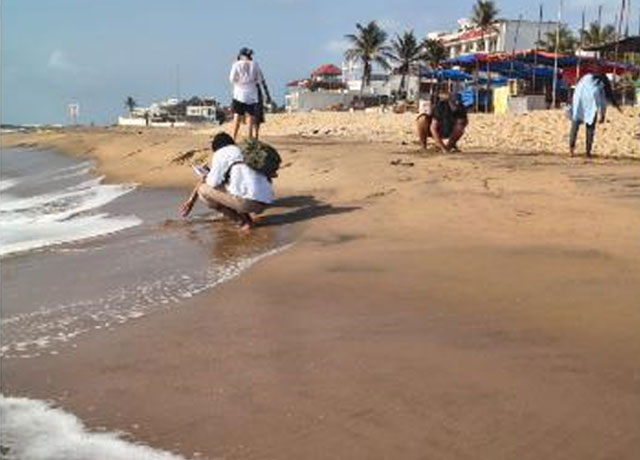
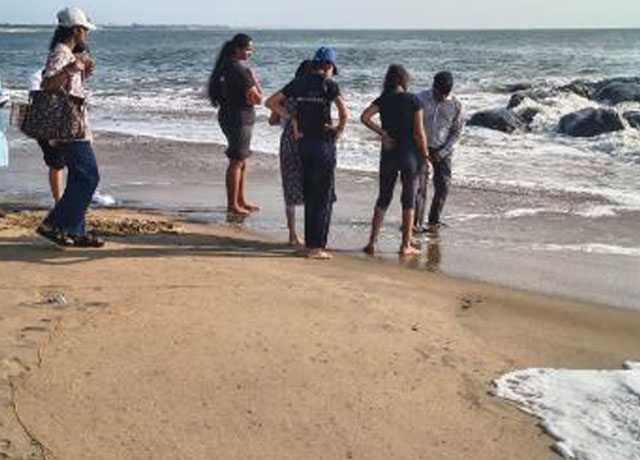
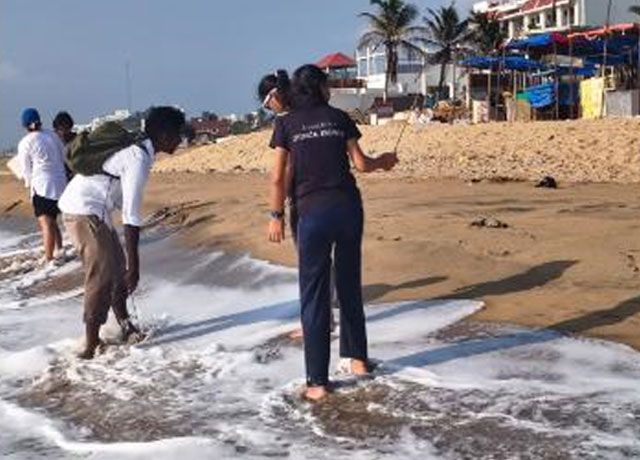
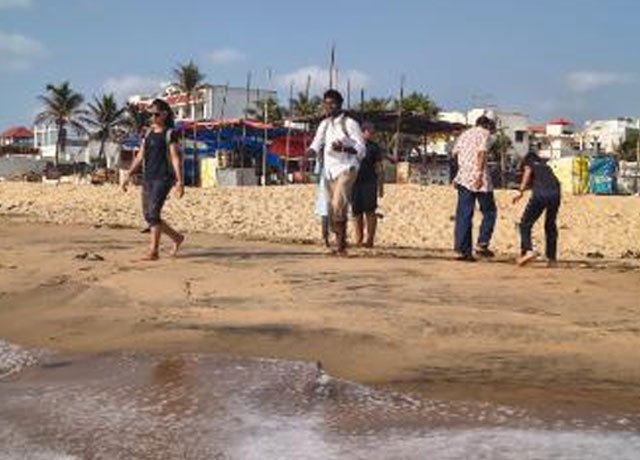
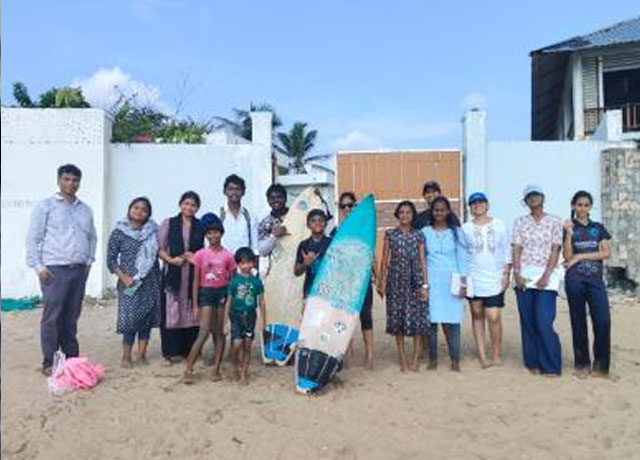
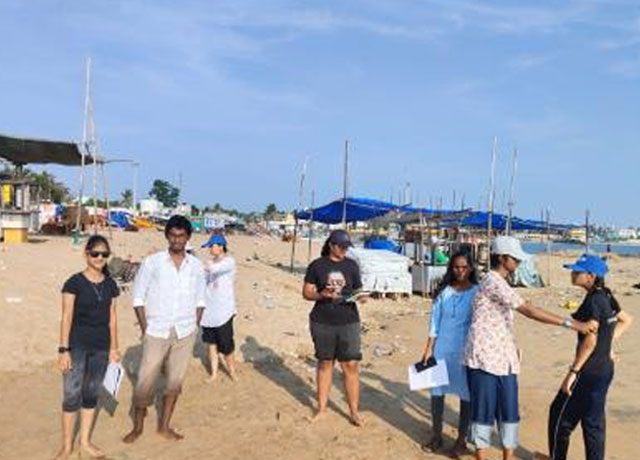
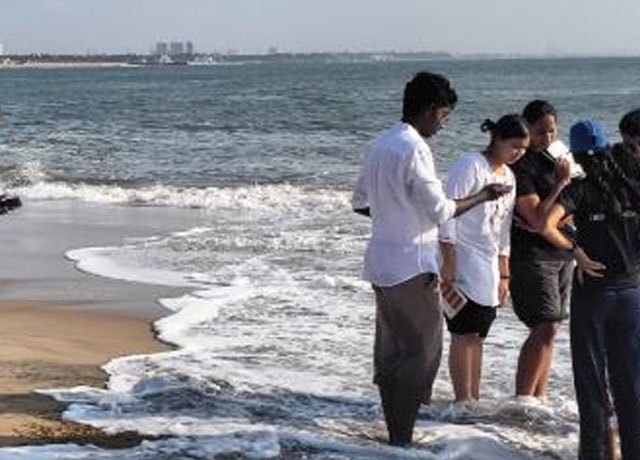
Under the guidance of Dr. Vinoth, participants conducted a beach profiling exercise at Kovalam Beach. Five transect stations were established at 20-meter intervals in a zig-zag pattern along the shoreline. At each station, GPS coordinates, time of observation, and beach characteristics were recorded. The beach was divided into high-tide, mid-tide, and low-tide zones for detailed assessment. Participants measured sand texture and moisture levels, observed beach slope variations, documented flora and fauna such as crabs and insects, and recorded the presence of marine debris. Variations in sediment composition, including coarse sand, fine sand, and black clay deposits, were noted. The exercise also included an interaction with a local professional surfer, who shared insights on coastal erosion, tourism activities, and their impacts on the coastal environment.
Field Survey Methodology
Transect Setup
Five transect stations at 20-meter intervals in a zig-zag pattern along the shoreline.
Zonal Assessment
Beach divided into high-tide, mid-tide, and low-tide zones for detailed analysis.
Data Collection
GPS coordinates, sand texture, moisture levels, slope, flora, fauna, and debris recording.
Key Observations & Findings
- Sediment Variation: Diverse composition including coarse sand, fine sand, and black clay deposits
- Coastal Erosion: Observed indicators of shoreline erosion and beach slope variations
- Marine Debris: Documented presence of plastic waste and other pollutants
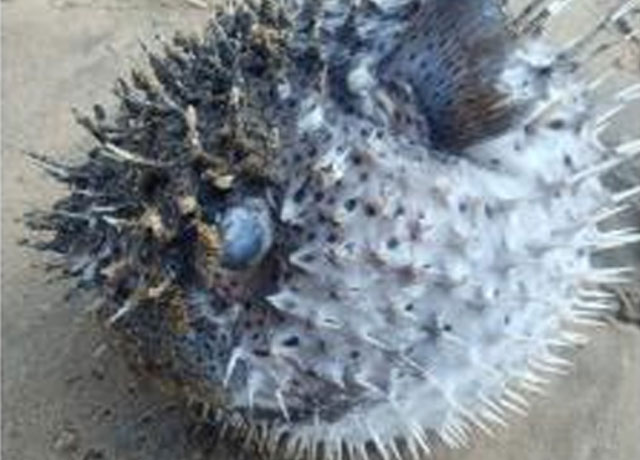
- Biodiversity: Observed crabs, insects, and other coastal flora and fauna
- Human Impact: Tourism activities and their effects on coastal environment
Outcome
Participants gained hands-on experience in coastal monitoring and beach profiling techniques. They developed practical skills in the use of GPS devices, transect-based surveys, and environmental data recording. The activity enhanced their understanding of beaches as dynamic ecosystems influenced by natural and human-induced factors. Observations of sediment variation, coastal erosion indicators, and plastic pollution reinforced the importance of long-term environmental monitoring. The interaction with the local surfer provided socio-economic perspectives on coastal resource management, helping participants appreciate the link between environmental conservation and community livelihoods.
Key Takeaways
Survey Skills
GPS usage, transect surveys, and environmental data recording
Coastal Assessment
Beach profiling and ecosystem dynamics understanding
Environmental Impact
Marine debris identification and pollution awareness
Community Link
Socio-economic perspectives on coastal resource management
Activity Gallery