Marine Low Carbon Day 2
Resource Person: Dr. Jayakumar
Designation: Principal Scientist, CIBA
Date: 15 May 2026
Venue: Central Institute of Brackishwater Aquaculture (CIBA), Muttukadu, Chennai
Scope
To provide participants with practical exposure to aquaculture research and production systems by exploring fish and shrimp breeding facilities, hatchery operations, and sustainable aquaculture practices. The visit aimed to enhance understanding of the scientific methods used in brackishwater aquaculture and their role in ensuring sustainable seafood production.
Content
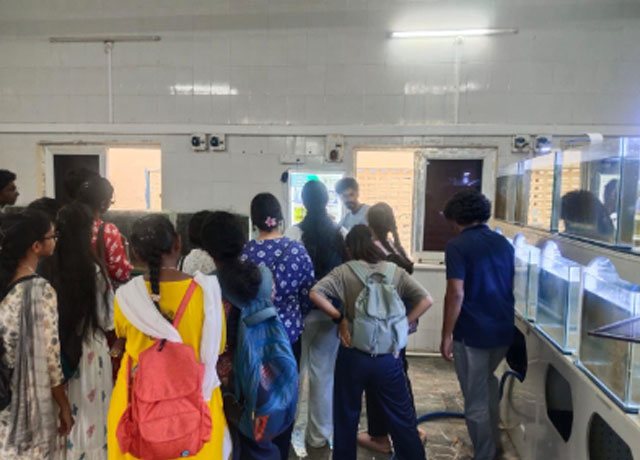
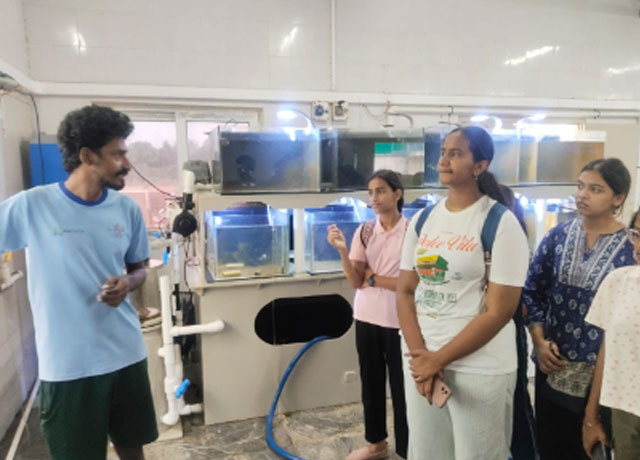
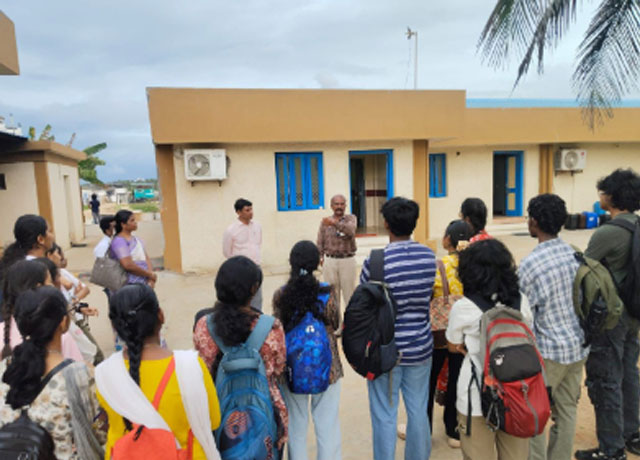
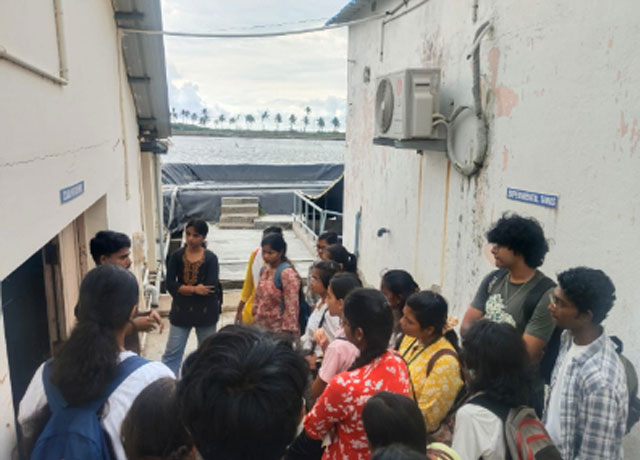
The visit commenced with an introductory presentation by Dr. Jayakumar, Principal Scientist, who provided an overview of CIBA's research activities and facilities. Participants toured finfish and crustacean culture laboratories, where they observed the rearing of species such as tilapia and crabs under controlled conditions. The group visited ornamental fish breeding units and learned about hatchery management, feeding practices, and larval development. Participants also explored fish breeding facilities, including milkfish culture systems, and observed various developmental stages from broodstock to larvae. The visit concluded at the shrimp hatchery, where whiteleg shrimp and tiger prawns were cultured. Interns examined larval stages under microscopes and gained hands-on experience observing live specimens. Throughout the visit, emphasis was placed on biosecurity measures, feeding management, and sustainable aquaculture practices.
Outcome
Participants gained valuable insights into the complete aquaculture production cycle, including breeding, hatchery management, larval rearing, and grow-out techniques. They developed an understanding of the scientific and technological approaches used in modern aquaculture research and the importance of maintaining biosecurity and environmental sustainability. The visit strengthened their knowledge of sustainable seafood production, species management, and the role of aquaculture research in supporting food security and fisheries development. The field experience successfully connected theoretical concepts with real-world aquaculture applications.
Key Takeaways
Fish Breeding
Understanding breeding techniques for tilapia, milkfish, and ornamental fish species.
Biosecurity
Learning about disease prevention and management in aquaculture facilities.
Sustainability
Exploring eco-friendly practices for sustainable seafood production.
Gallery