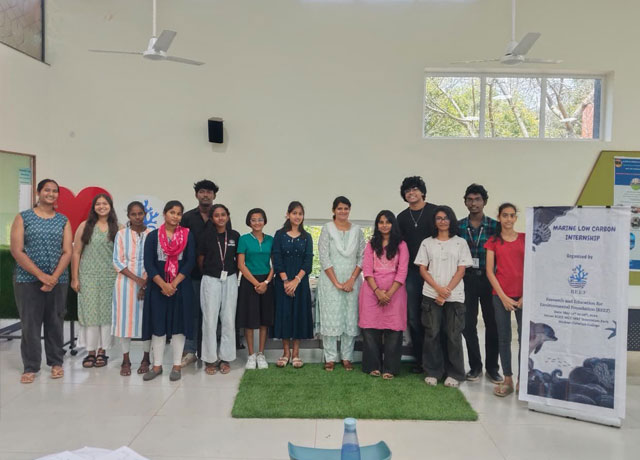
Marine Low Carbon Day 7
Resource Person: Dr. Lynda Keren
Designation: Environmental Scientist and Education Consultant
Date: 20 May 2026
Duration: Interactive Lecture
Theme: Carbon Sequestration
Focus: Climate Change Mitigation
Scope
To provide participants with an understanding of carbon sequestration processes, the role of natural carbon sinks in climate regulation, and the importance of reducing greenhouse gas emissions to achieve global climate targets. The session aimed to highlight the critical contribution of oceans and coastal ecosystems to climate change mitigation.
Content
Dr. Lynda Keren explained the concept of carbon sequestration and described how natural carbon sinks such as oceans, forests, and soils absorb and store atmospheric carbon dioxide. The session emphasized the significant role of oceans in mitigating climate change through carbon absorption and storage. Participants were introduced to global climate targets, including the need to reduce per-capita carbon emissions from approximately 4 tonnes to 2 tonnes annually to help limit global warming to 2°C by 2050. The lecture also highlighted the carbon storage potential of coastal ecosystems such as mangroves and seagrass meadows. Through interactive discussions, participants explored practical low-carbon lifestyle choices, including energy conservation, waste reduction, and sustainable consumption practices.
Carbon Sequestration Mechanisms
Ocean Carbon Sink
Oceans absorb and store significant amounts of atmospheric CO₂
Mangrove Storage
Mangroves are highly efficient carbon sinks and storage systems
Seagrass Meadows
Seagrasses capture and store carbon in their biomass and sediment
Soil & Forests
Forests and soils act as major terrestrial carbon sinks
Global Climate Targets
Current Emissions
4 tonnes
Per-capita carbon emissions currently average 4 tonnes annually
Target by 2050
2 tonnes
Target reduction to 2 tonnes per-capita to limit global warming to 2°C
Low-Carbon Lifestyle Choices
Energy Conservation
- Use energy-efficient appliances
- Reduce electricity consumption
- Embrace renewable energy sources
Waste Reduction
- Reduce, reuse, recycle
- Minimize plastic usage
- Compost organic waste
Sustainable Consumption
- Choose sustainable products
- Support eco-friendly brands
- Local and seasonal produce
Outcome
Participants gained a comprehensive understanding of carbon sequestration mechanisms and the importance of natural carbon sinks in regulating the global climate. They developed awareness of international climate goals and the need for significant reductions in carbon emissions. The session strengthened appreciation for the role of oceans, mangroves, and seagrasses in climate mitigation and encouraged participants to adopt environmentally responsible behaviors that contribute to a low-carbon future. The knowledge gained enhanced their understanding of the connection between ecosystem conservation and global climate resilience.
Key Takeaways
Carbon Sequestration
Understanding how carbon is captured and stored naturally
Natural Carbon Sinks
Role of oceans, mangroves, forests, and seagrasses
Climate Goals
Reducing emissions to limit global warming to 2°C by 2050
Low-Carbon Living
Adopting sustainable lifestyle choices
Activity Gallery