Marine Low Carbon Day 13
Resource Person: Mrs. Renuga
Participants: Interns
Date: 25 May 2026
Venue: Chennai Fishing Harbour (Near New Washermenpet)
Theme: Urban Coastal Ecology
Focus: Pollution Assessment & Sustainable Harbour
Scope
To provide participants with an understanding of the environmental conditions of an urban coastal ecosystem and to assess the impacts of pollution, fishing activities, and infrastructure development on marine biodiversity and water quality within a fishing harbour environment.
Content
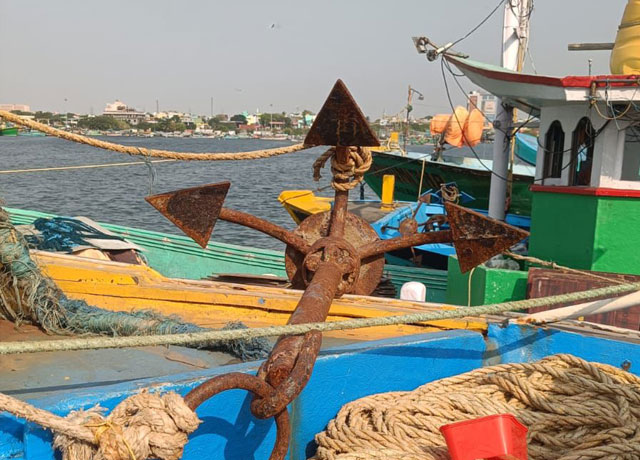
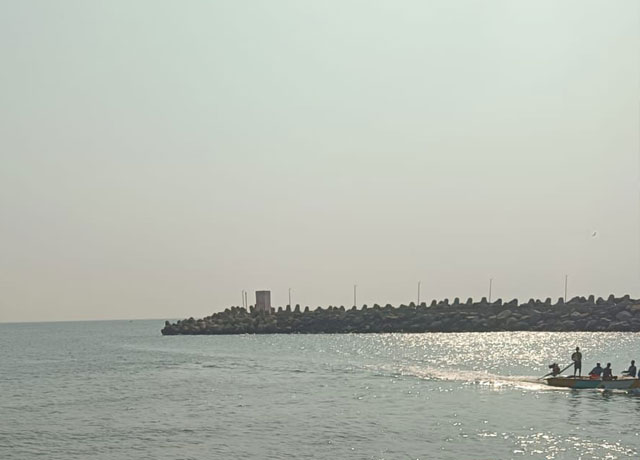
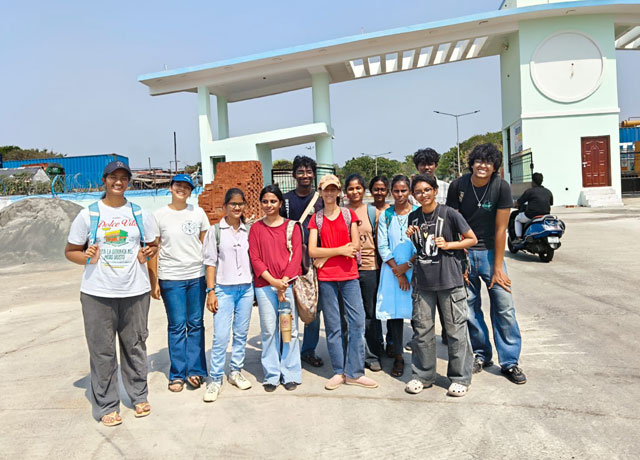
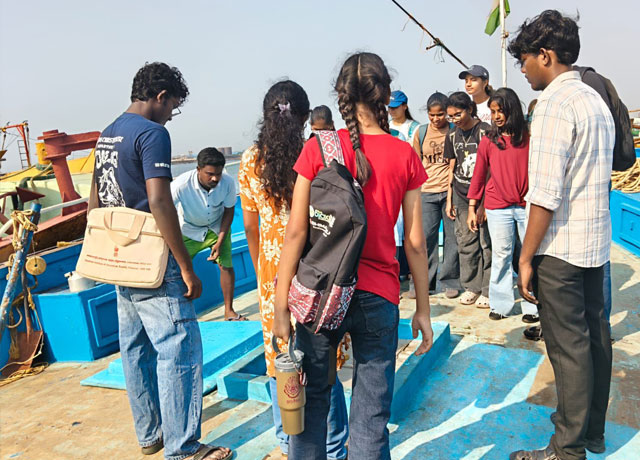
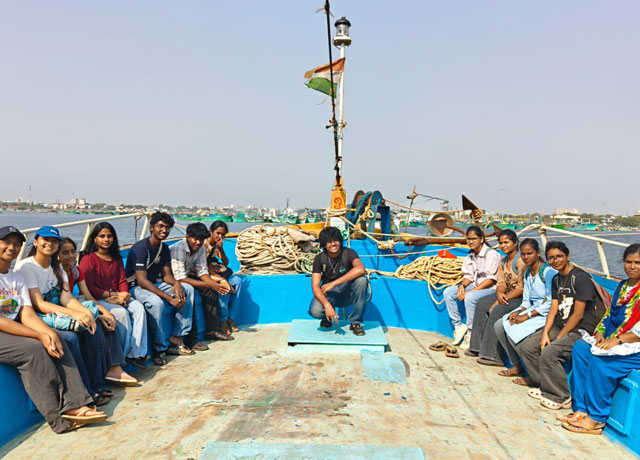
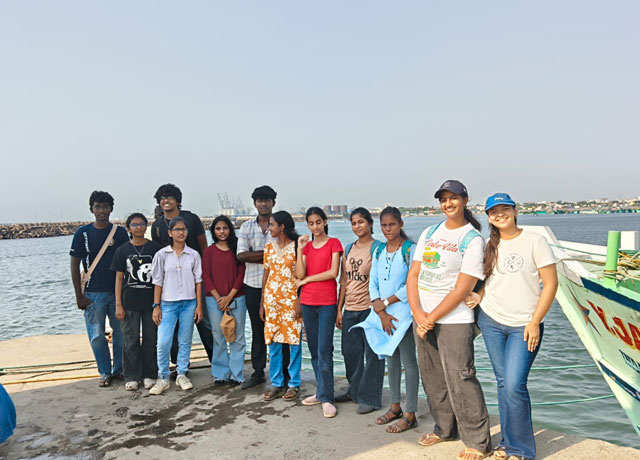
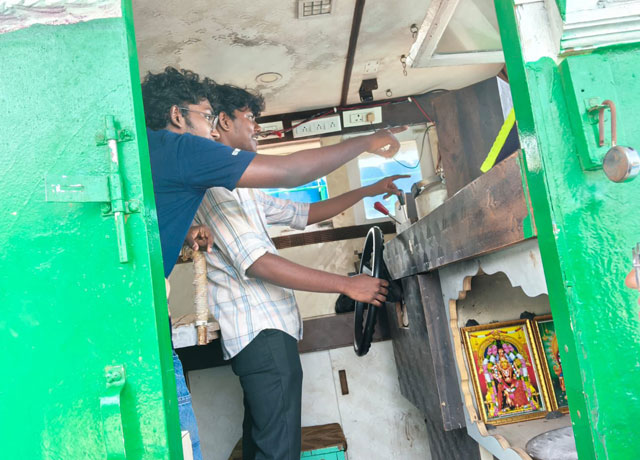
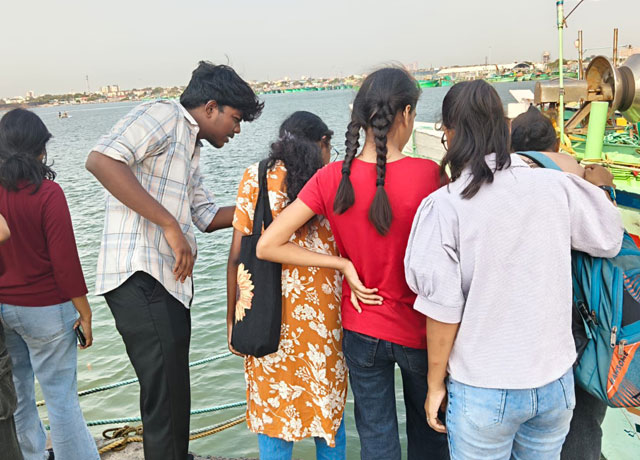
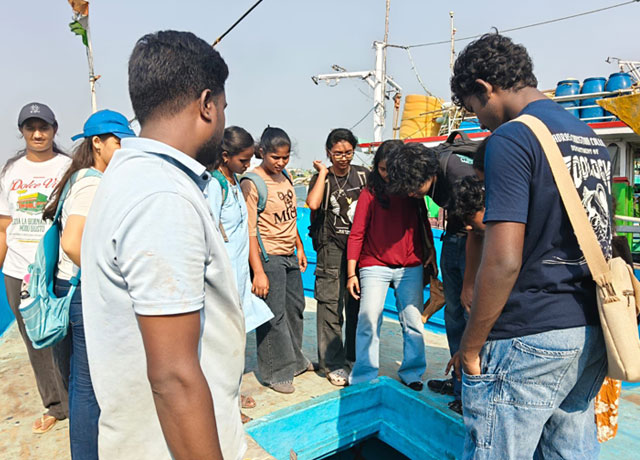
Under the guidance of Mrs. Renuga, participants conducted a field visit to the Chennai Fishing Harbour to observe the interactions between marine ecosystems and urban activities. Interns examined water quality conditions and documented visible signs of pollution, including oil slicks, floating plastic waste, and accumulated debris. Despite the degraded environment, various marine organisms such as jellyfish, crabs, and small fish were observed within the harbour waters. Participants also visited boat construction and maintenance areas, where they compared traditional wooden fishing vessels with modern fiberglass boats manufactured using resin-based materials. Interactions with local fishermen provided insights into the challenges faced by the fishing community, including declining fish catches, pollution-related impacts, and changing coastal conditions. Discussions focused on marine pollution sources, waste management issues, and the need for sustainable harbour operations.
Pollution Indicators Documented
Oil Slicks
Visible oil contamination on water surface from boat operations and urban runoff
Plastic Waste
Floating plastic debris and accumulated waste materials in harbour waters
Debris Accumulation
Accumulated solid waste and debris along harbour infrastructure
Marine Life Observed (Despite Pollution)
Jellyfish
Observed thriving in harbour waters
Crabs
Small crabs observed in intertidal areas
Small Fish
Various small fish species still present
Outcome
Participants gained first-hand exposure to the environmental challenges associated with urban coastal ecosystems and fishing harbour activities. The visit enhanced their understanding of how pollution, improper waste disposal, and industrial activities can negatively affect marine biodiversity and water quality. Observations of marine organisms surviving in polluted conditions highlighted both ecosystem resilience and vulnerability. The interaction with fishermen provided valuable socio-economic perspectives on the consequences of environmental degradation. Overall, the visit reinforced the importance of environmental regulations, sustainable coastal management, and pollution control measures in protecting marine ecosystems and supporting the livelihoods of coastal communities.
Key Takeaways
Pollution Impact
Understanding urban coastal pollution sources and effects
Ecosystem Resilience
Marine organisms surviving despite degraded conditions
Community Livelihoods
Socio-economic challenges of fishing communities
Sustainable Management
Need for regulations and pollution control measures
Activity Gallery