Marine Low Carbon Day 8
Participants: Interns
Guides: Farm Manager & Aquaculture Technicians
Date: 21 May 2026
Venue: Shrimp Aquaculture Farm, Kattur (Near Ponneri)
Theme: Commercial Shrimp Aquaculture
Focus: Sustainable Farm Management
Scope
To provide participants with practical exposure to commercial shrimp aquaculture operations and sustainable farm management practices. The visit aimed to enhance understanding of shrimp production systems, resource-efficient farming techniques, and the environmental considerations associated with aquaculture.
Content
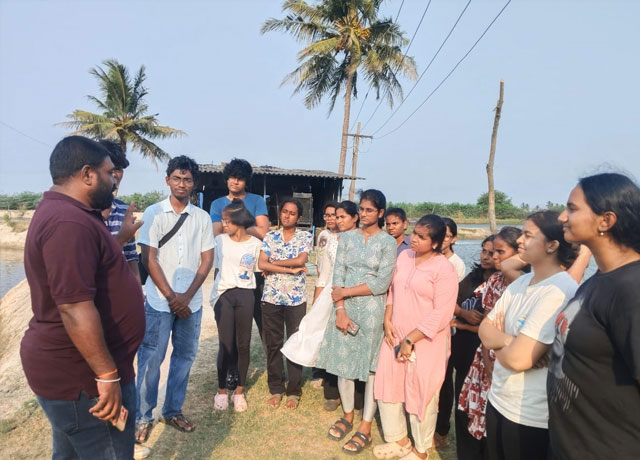
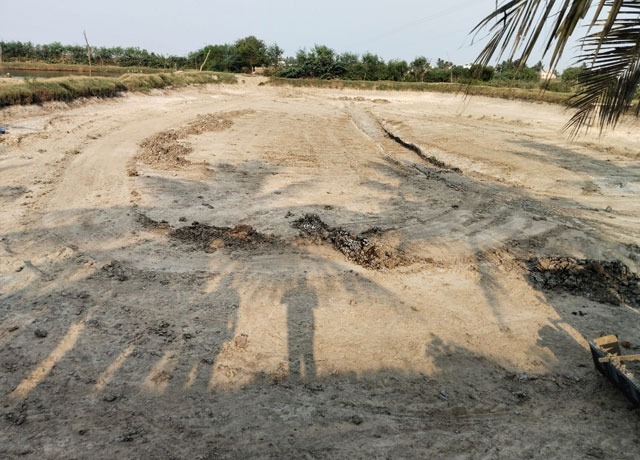
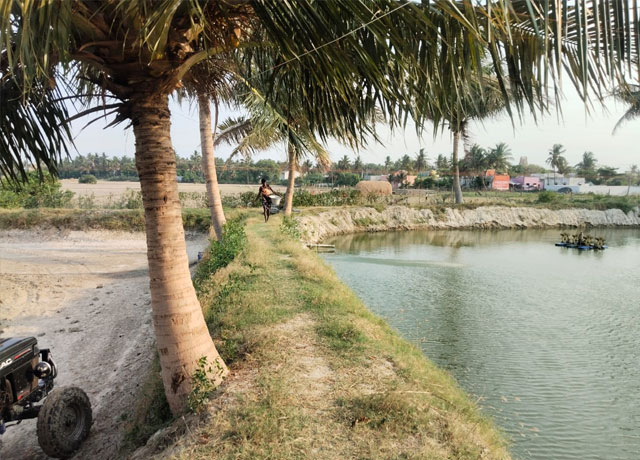
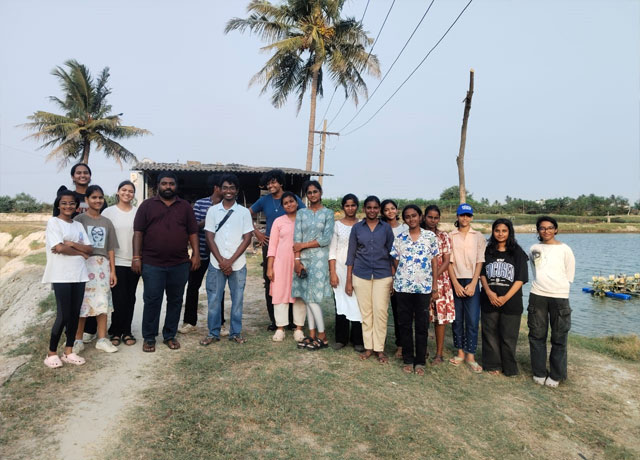
Participants visited a commercial shrimp farm in Kattur and observed various stages of shrimp production. The farm manager explained pond management practices, stocking densities, growth cycles, and feeding strategies used in shrimp culture. Interns observed the operation of submerged aerators, which maintain adequate dissolved oxygen levels essential for shrimp health and growth. The session highlighted sustainable interventions, particularly the farm's innovative water recycling system, where water from one pond is reused in another to reduce water consumption and minimize effluent discharge. Participants also witnessed shrimp harvesting operations and observed the sorting and handling of harvested shrimp. Hands-on interaction with live black tiger shrimp allowed interns to examine anatomical features such as the exoskeleton, appendages, and body segmentation.
Key Learning Areas
Pond Management
- Stocking density management
- Growth cycle monitoring
- Feeding strategies and nutrition
Aeration & Water Management
- Submerged aerator operation
- Dissolved oxygen maintenance
- Water quality management
Sustainable Practices
- Water recycling system
- Effluent discharge reduction
- Resource efficiency
Sustainable Innovation Highlight
Water Recycling System
The farm utilizes an innovative water recycling system where water from one pond is reused in another, significantly reducing water consumption and minimizing effluent discharge into the environment.
Submerged Aeration
Advanced submerged aerators maintain optimal dissolved oxygen levels, ensuring shrimp health and growth while optimizing energy usage and operational efficiency.
Hands-On Learning: Shrimp Anatomy
Exoskeleton
Observed the protective outer shell structure of black tiger shrimp
Appendages
Examined the various appendages used for movement and feeding
Body Segmentation
Studied the segmented body structure of live specimens
Live Observation
Hands-on interaction with live black tiger shrimp specimens
Harvesting Operations
Outcome
Participants gained a practical understanding of commercial shrimp farming practices, including pond management, aeration systems, feed management, and harvesting techniques. The visit demonstrated how resource-efficient technologies, such as water recycling, can improve sustainability in aquaculture. Interns developed awareness of the environmental challenges and responsibilities associated with shrimp farming, including water quality management and ecological impacts. The hands-on experience strengthened their understanding of shrimp biology and reinforced concepts related to responsible aquaculture, sustainable seafood production, and environmental stewardship.
Key Takeaways
Shrimp Production
Understanding commercial shrimp farming from pond to harvest
Resource Efficiency
Water recycling and sustainable farm management practices
Environmental Stewardship
Understanding ecological impacts and responsible aquaculture
Hands-On Experience
Practical learning through live specimen observation
Activity Gallery