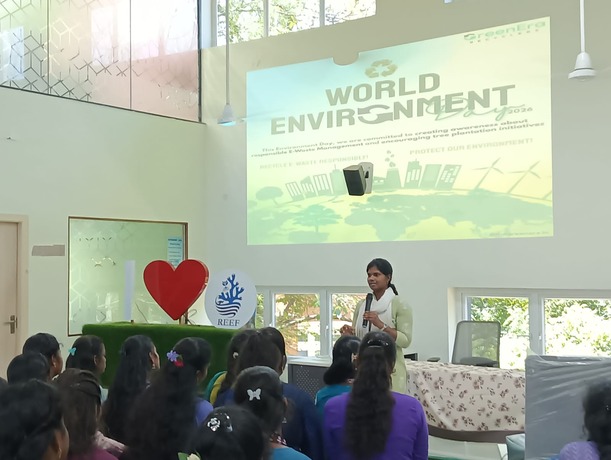
World Environment Day Special Lecture on E-Waste Management
Participants: REEF Marine Low Carbon Internship 2026 Participants
Resource Person:
Mrs. Kanimozhi
Founder, The Greenera
Date: 05 June 2026
Venue: Madras Christian College (MCC), Tambaram, Chennai
Theme: World Environment Day 2026
Focus: E-Waste Management, Sustainable Recycling & Circular Economy
Scope
To provide participants with a comprehensive understanding of electronic waste (e-waste), its environmental and health impacts, responsible recycling practices, Extended Producer Responsibility (EPR), and the principles of the circular economy. The programme aimed to strengthen awareness of sustainable waste management while encouraging environmentally responsible lifestyles through effective e-waste management and resource conservation.
Content
As part of the World Environment Day 2026 celebrations, the REEF Marine Low Carbon Internship 2026 organized a special lecture on E-Waste Management, delivered by Mrs. Kanimozhi, Founder of The Greenera. The session introduced participants to the growing challenge of electronic waste, its environmental and health impacts, and the importance of adopting sustainable recycling practices to conserve natural resources and protect the environment.
Mrs. Kanimozhi explained the different categories and sources of electronic waste, including household appliances, computers, mobile phones, batteries, communication devices, and other electrical and electronic equipment. Participants learned about responsible collection, segregation, dismantling, refurbishment, recycling, and environmentally sound disposal methods for electronic waste.
The lecture highlighted the significance of Extended Producer Responsibility (EPR), the principles of the circular economy, and the role of individuals in reducing electronic waste generation through responsible consumption, reuse, repair, and recycling. Through practical examples and interactive discussions, participants gained a deeper understanding of sustainable waste management and environmental stewardship.
Key Topics Covered
E-Waste
Understanding electronic waste, its sources, categories and increasing global generation.
Recycling
Responsible collection, segregation, refurbishment and environmentally safe recycling practices.
Circular Economy
Resource conservation through reuse, repair, recycling and sustainable consumption.
Environmental Stewardship
Promoting responsible lifestyles and sustainable environmental management.
Major Topics Discussed
E-Waste Management
- Sources of electronic waste
- Safe collection and segregation
- Recycling and responsible disposal
Sustainability
- Extended Producer Responsibility (EPR)
- Circular Economy Principles
- Environmental Stewardship
Sustainable E-Waste Management
- Rapid Growth of Electronic Waste
- Improper Disposal Practices
- Environmental Pollution
- Health Risks from Hazardous Materials
- Low Public Awareness
- Informal Recycling Practices
- Responsible Collection & Segregation
- Authorized Recycling Facilities
- Extended Producer Responsibility (EPR)
- Repair, Reuse & Refurbishment
- Circular Economy Practices
- Environmental Awareness
Importance of Responsible Recycling
Participants learned that responsible e-waste management helps conserve valuable natural resources, minimizes environmental pollution, reduces landfill waste, prevents the release of hazardous substances, and supports sustainable development. The session emphasized that adopting responsible recycling practices and environmentally conscious lifestyles contributes to a cleaner, healthier, and more sustainable future.
Learning Outcome
By the end of the session, participants developed a comprehensive understanding of electronic waste, its environmental and health impacts, responsible recycling practices, Extended Producer Responsibility (EPR), and the principles of the circular economy. The lecture strengthened environmental awareness and encouraged participants to adopt sustainable waste management practices in their daily lives.
Key Takeaways
E-Waste Awareness
Understanding electronic waste, its sources, environmental impacts, and responsible management.
Responsible Recycling
Safe collection, segregation, recycling, refurbishment, and environmentally sound disposal.
Circular Economy
Promoting resource conservation through reuse, repair, recycling, and sustainable consumption.
Environmental Stewardship
Encouraging environmentally responsible lifestyles for sustainable development and a cleaner future.
Activity Gallery