World Sea Turtle Day Internship Program
Date:
23 May 2026
Participants:
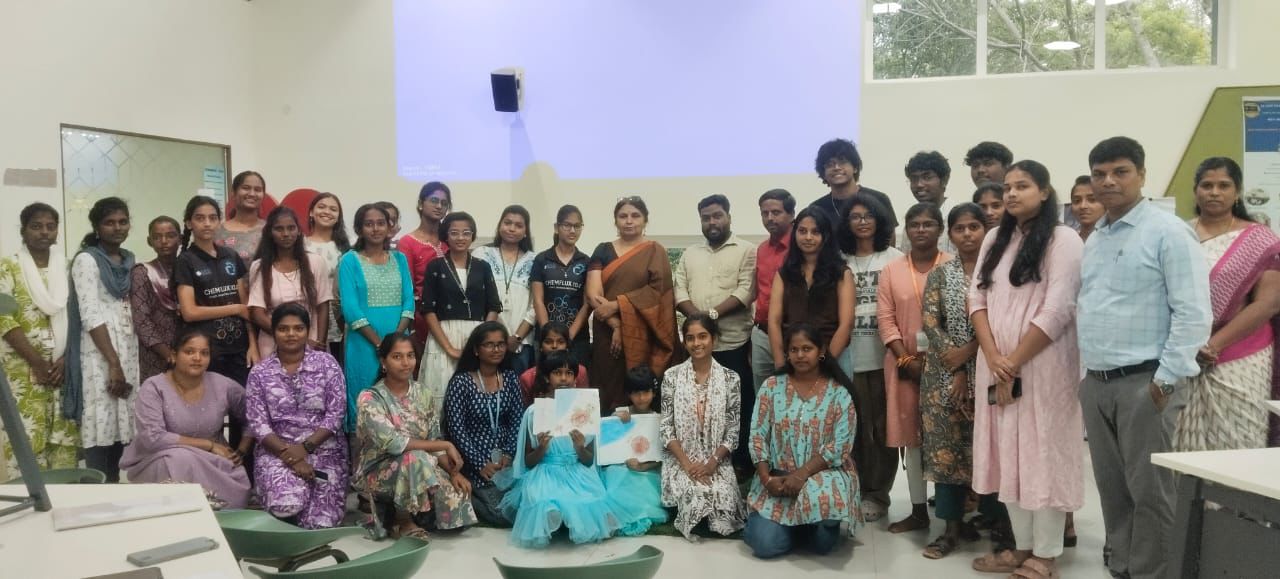
REEF Internship Program 2026 Participants
Venue:
Madras Christian College (MCC)
MRF Innovation Park
Tambaram, Chennai
Resource Persons:
Mr. M. Sivanesan
Dr. Kalpana
Programme Overview
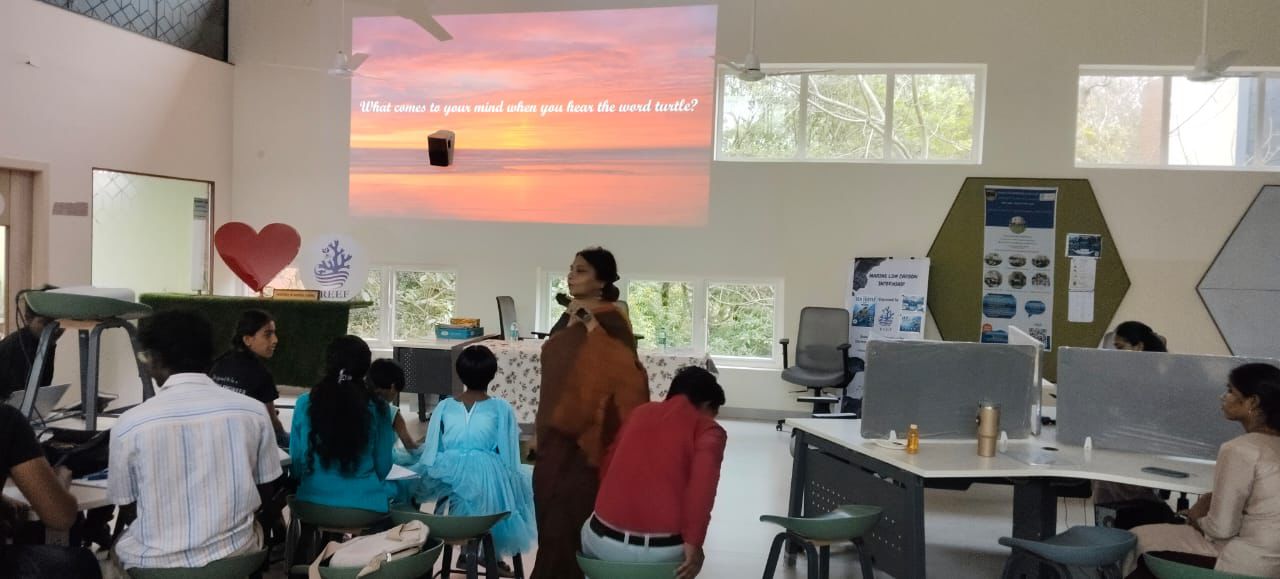
The Research and Education for Environmental Foundation (REEF) successfully organized a special World Sea Turtle Day Internship Program on 23 May 2026 at Madras Christian College (MCC), MRF Innovation Park, Tambaram, Chennai. The programme provided participants with practical knowledge on marine conservation, ocean plastic recycling, circular economy, sustainability, and sea turtle conservation through expert-led sessions and interactive activities.
Session 1 – Ocean Plastic Recycling into Fabric
Resource Person:
Mr. M. Sivanesan
Founder & Managing Trustee, REEF
Mr. M. Sivanesan introduced the REEF Fashion Fabrics Initiative, an innovative concept focused on transforming ocean plastic waste into sustainable textile fibres. The session demonstrated how marine plastic pollution can be converted into valuable products through modern recycling technologies.
Through educational videos and case studies, interns observed the transformation of discarded marine plastic into wearable textile materials. The session encouraged participants to understand the importance of sustainable innovation in reducing marine pollution while creating environmentally responsible products.
Learning Objectives
Innovative Recycling Technologies
Understand innovative recycling technologies for ocean plastic.
Plastic-to-Fabric Process
Learn the complete plastic-to-fabric manufacturing process and sustainable textile production.
Circular Economy
Recognize the importance of circular economy practices for environmental sustainability.
Industry Collaboration
Discover industry collaborations that support environmental sustainability and green innovation.
Key Learning Outcomes
- Ocean plastic can become valuable raw material.
- Plastic recycling reduces marine pollution.
- Sustainable textile manufacturing supports environmental conservation.
- Circular economy principles minimise waste.
- Innovation creates new opportunities for green industries.
- Engineering solutions contribute to healthier oceans.
The session encouraged interns to think beyond waste management and explore entrepreneurship through sustainable environmental innovation.
Session 2 – Sea Turtle Conservation
Resource Person:
Dr. Kalpana
The second session focused on the conservation of sea turtles and their importance in maintaining healthy marine ecosystems. Dr. Kalpana explained the biology, ecology, life cycle, nesting behaviour, migration patterns, and feeding habits of sea turtles found along the Indian coastline.
Participants learned about the ecological significance of sea turtles as indicator species and their contribution to maintaining balanced marine ecosystems. The session also highlighted the relationship between healthy oceans, biodiversity conservation, and sustainable coastal management.
Major Threats to Sea Turtles
Plastic Pollution
Marine plastic waste threatens sea turtles through ingestion and entanglement.
Fishing Activities
Ghost nets and accidental capture remain major threats to sea turtle populations.
Habitat Loss
Coastal development and habitat degradation reduce suitable nesting beaches.
Conservation Measures
Dr. Kalpana discussed various conservation strategies implemented to protect sea turtle populations, including habitat protection, beach monitoring, community participation, awareness programmes, scientific research, and responsible coastal management.
Participants were encouraged to contribute towards marine conservation by reducing plastic consumption, supporting coastal clean-up initiatives, protecting nesting habitats, and promoting environmental awareness within their communities.
Key Learning Points
- Importance of sea turtles in maintaining marine ecosystem balance.
- Major threats affecting sea turtle survival.
- Role of coastal communities in conservation.
- Importance of reducing marine plastic pollution.
- Need for scientific research and environmental education.
- Sustainable coastal management supports marine biodiversity.
Learning Outcome
By the end of the World Sea Turtle Day Internship Program, participants developed a comprehensive understanding of ocean plastic recycling technologies, sustainable textile production, circular economy principles, sea turtle ecology, marine biodiversity, and practical conservation strategies. The programme strengthened awareness of environmental sustainability and inspired participants to actively contribute towards marine conservation through research, innovation, education, and community participation.
Programme Conclusion
The World Sea Turtle Day Internship Program successfully combined sustainability, innovation, and marine conservation through two expert sessions on Ocean Plastic Recycling into Fabric and Sea Turtle Conservation. The programme encouraged interns to understand the importance of reducing marine pollution, protecting endangered marine species, and adopting environmentally responsible practices that support healthy coastal ecosystems and future climate resilience.
Activity Gallery