From Propagule to Mangrove Forest
Introduction
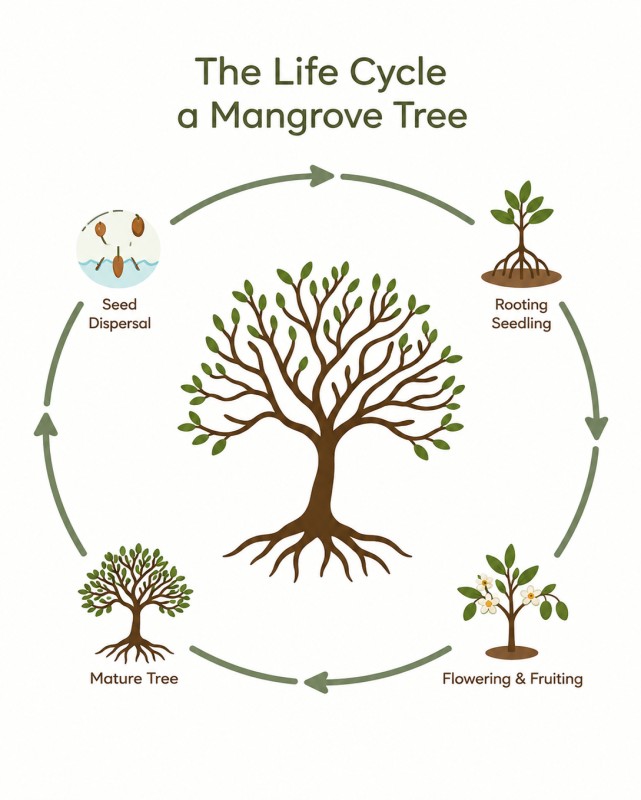
A mature mangrove forest may look permanent and powerful, but every tree begins with a new generation. In mangroves, this journey can begin with a small propagule carried by tides and coastal currents. If the propagule reaches a suitable location, it can establish itself in soft sediment and begin developing into a young mangrove.
From Propagule to Mangrove Forest
This simple beginning can eventually lead to a complex coastal ecosystem. Over time, individual mangrove trees develop roots and canopies that provide shelter and habitat for fish, birds, crustaceans and other organisms.
The Journey of a Mangrove Propagule
Mangrove propagules are adapted to coastal environments and can be transported by water. Tides and currents can move them through coastal areas, allowing mangroves to establish new plants when suitable conditions are available.
When a propagule reaches appropriate sediment, it can begin the process of establishment. Its roots develop and anchor the young plant, helping it withstand the changing conditions of the intertidal environment. This early stage is critical because the young mangrove must cope with salt, waterlogging and shifting coastal sediments.
From Young Plant to Mature Tree
As the mangrove grows, its root system becomes increasingly important. The roots anchor the tree and may also help with gas exchange in waterlogged sediments. Depending on the species, mangroves can develop distinctive aerial or specialised roots that become characteristic features of the forest.
As more trees establish and grow, they form a larger mangrove community. The canopy provides shelter above the sediment, while the root network creates a complex habitat below. Fish, crabs, birds and other organisms can use different parts of the ecosystem throughout their lives.
Mangroves, Carbon and Coastal Protection
As mangrove forests mature, they contribute to important ecosystem processes. Their vegetation captures carbon, while sediments within mangrove environments can store carbon over time. Their root systems also help stabilise coastal sediments and provide natural habitat for marine organisms.
The transformation from a single propagule into a mature mangrove forest is therefore more than a story of plant growth. It is the development of an entire ecosystem.
Propagule → Establishment → Roots → Young Tree → Mature Tree → Mangrove Forest → Coastal Ecosystem
Why Every Mangrove Matters
A mature mangrove forest represents years of growth, ecological interactions and natural development. Protecting these forests means protecting the trees that already exist as well as the future generations beginning their journey as propagules.
The story of a mangrove reminds us that large ecological systems can begin with something very small. A tiny propagule carried by the tide can eventually become part of a forest that protects coastlines, supports biodiversity and contributes to climate resilience. Small beginnings can create enormous ecological impacts.