The Incredible Journey of Sea Turtle Migration
Introduction
The open ocean may appear endless and featureless to us, but for sea turtles it is a connected network of habitats. Throughout their lives, sea turtles may travel hundreds or even thousands of kilometres between feeding grounds, breeding areas and nesting beaches. These long-distance movements make them some of the most remarkable travellers in the marine world.
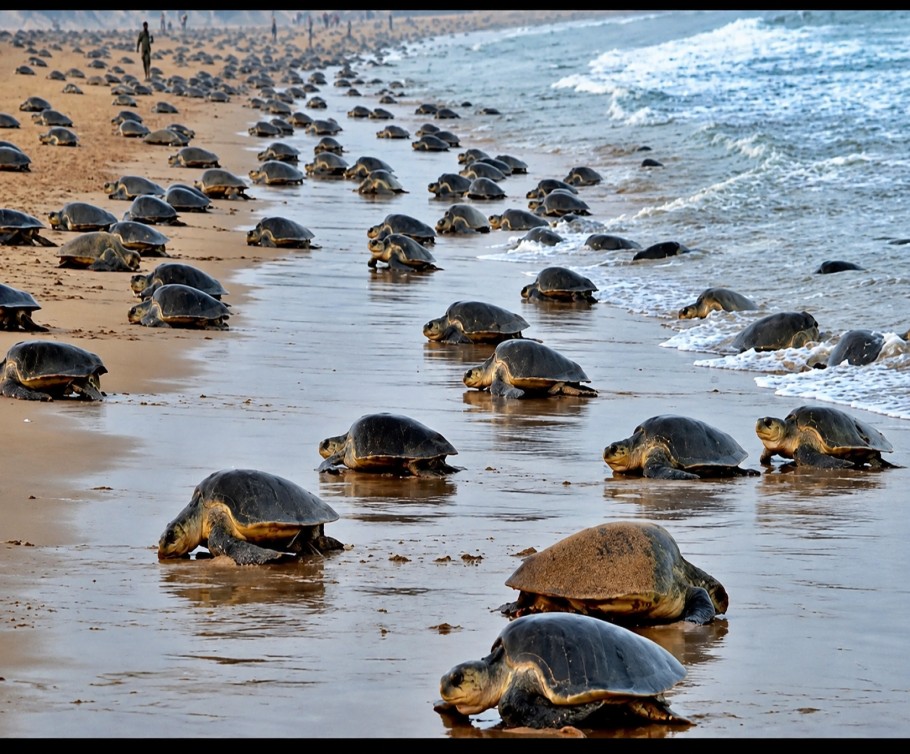
The Incredible Journey of Sea Turtle Migration
From the moment a tiny hatchling enters the ocean, it begins a journey shaped by survival, feeding, growth and reproduction. A turtle may spend different stages of its life in open ocean waters, coastal habitats, seagrass meadows or coral reef environments. Each of these places can provide resources that are important at different points in its life.
Why Do Sea Turtles Migrate?
Migration allows sea turtles to move between habitats that provide food, shelter and suitable conditions for reproduction. A turtle may feed in one area while travelling to another location for breeding or nesting. This means a single turtle can connect ecosystems that are separated by hundreds or thousands of kilometres.
These movements also demonstrate why marine conservation cannot be limited to a single beach or coastal area. Protecting a nesting site is important, but the turtle also needs safe waters and healthy feeding habitats during the rest of its life. The survival of sea turtles therefore depends on maintaining the ecological connections between different marine environments.
How Do Sea Turtles Navigate?
One of the most fascinating aspects of sea turtle migration is their ability to navigate across enormous distances. Scientists have found evidence that some sea turtles can use Earth's magnetic field to help guide their movements. This remarkable ability allows them to respond to information that is invisible to humans.
Sea turtle navigation is not necessarily based on a single environmental signal. Magnetic information may work alongside other environmental cues such as ocean currents, wave direction and conditions near the coastline. Scientists continue to study how these different signals help turtles move through the marine environment.
Threats Along the Migration Route
Migration exposes sea turtles to a wide range of threats. Plastic pollution can create ingestion and entanglement risks, while fishing activities can result in accidental capture. Coastal development can affect habitats near shore, and vessel traffic can create risks for turtles travelling through coastal waters.
Climate change adds another layer of pressure by influencing coastal and marine environments. Because turtles may depend on several habitats throughout their lives, damage to any part of their journey can affect their survival. This is why conservation needs to consider the entire migration pathway rather than focusing on one location.
Protecting the Entire Journey
Sea turtle conservation should be viewed as the protection of a complete life journey: Nesting Beach → Coastal Waters → Feeding Grounds → Migration Routes → Open Ocean. Each part of this network has a role to play in the survival of sea turtles.
The journey of a sea turtle reminds us that the ocean is deeply interconnected. A turtle born on one coastline may eventually travel through many marine environments before returning to reproduce. Protect the beach. Protect the ocean. Protect their journey.