Mangroves as Natural Climate Defenders: Blue Carbon, Coastal Protection and Climate Resilience
Introduction: Mangroves as Natural Climate Defenders
When we think about solutions to climate change, we often picture solar panels, electric vehicles and advanced technologies. But along the coastlines of Chennai, Tamil Nadu and the wider Indian coastline, nature itself provides one of the most valuable climate solutions: mangrove forests.
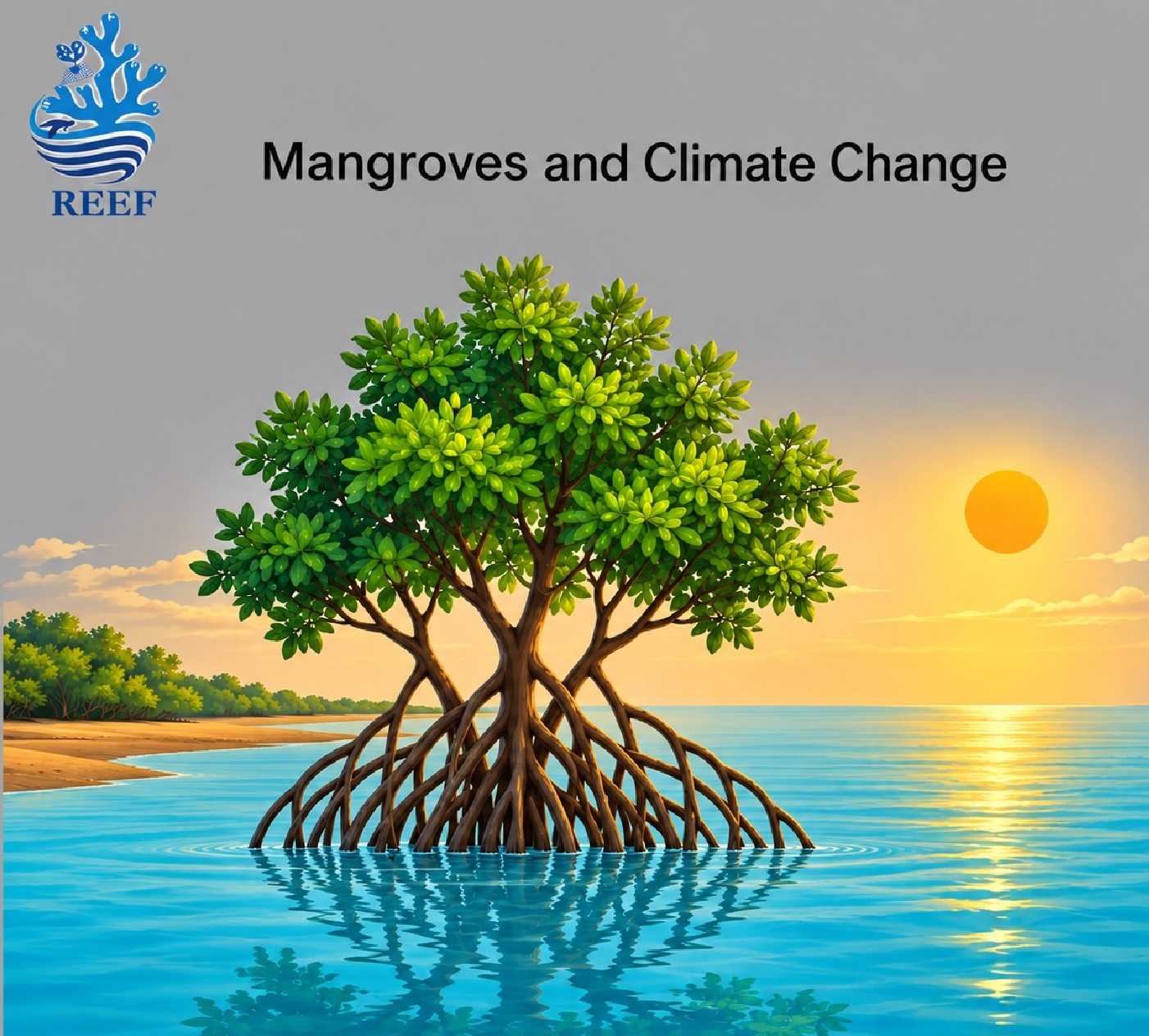
Mangroves as Natural Climate Defenders: Blue Carbon and Coastal Resilience
Mangroves are unique coastal ecosystems that thrive where land meets the sea. These salt-tolerant plants provide habitat for fish, crabs, birds and other wildlife while also supporting coastal communities. From a marine biology and conservation perspective, mangroves are particularly important because they connect terrestrial, freshwater and marine ecosystems.
Their importance goes beyond biodiversity. Mangrove forests capture atmospheric carbon dioxide and store carbon in their trunks, branches, roots and, importantly, their waterlogged sediments. This makes mangroves an important component of blue carbon ecosystems and a valuable nature-based solution for climate resilience.
How Do Mangroves Help Fight Climate Change?
Mangroves naturally absorb carbon dioxide through photosynthesis and store carbon within their biomass and sediments. Because mangrove sediments are often waterlogged and oxygen-poor, decomposition can be slower, allowing substantial amounts of carbon to remain stored for long periods.
This process, known as carbon sequestration, makes mangrove ecosystems important in discussions surrounding climate change mitigation. However, mangroves should not be viewed only as carbon-storage systems. Their climate value comes from a combination of carbon storage, biodiversity conservation, coastal protection and ecosystem services.
Healthy mangrove forests can also reduce the impact of waves, tidal flows and coastal erosion. Their complex root systems help stabilize sediments and create sheltered environments that support numerous marine and coastal organisms.
Why Mangrove Sediments Matter
One of the most fascinating aspects of mangrove ecosystems is what happens beneath the surface.
While the trees are visible above ground, a significant amount of carbon is stored below ground in roots and coastal sediments. Organic matter accumulates in these sediments over time, creating an important long-term carbon reservoir.
This is one reason why marine biology research increasingly focuses not only on mangrove vegetation but also on sediment characteristics, carbon stocks, microbial processes, nutrient cycling and ecosystem interactions.
Understanding these below-ground processes is essential for developing effective mangrove conservation and restoration strategies.
Mangroves and Coastal Protection in Chennai
For coastal cities such as Chennai, healthy coastal ecosystems are increasingly important in the context of climate resilience. Mangroves and associated wetlands can contribute to shoreline stability, provide habitat for aquatic organisms and support coastal biodiversity.
The broader Chennai–Pulicat coastal landscape contains ecologically important wetlands, estuarine environments and coastal habitats that are valuable for both biodiversity and local livelihoods.
From a marine biology perspective, protecting these ecosystems means protecting interconnected food webs, nursery habitats and ecological processes rather than simply conserving individual plant species.
What Happens When Mangroves Are Lost?
Mangrove degradation can have consequences extending far beyond the immediate loss of vegetation. Coastal development, habitat conversion, pollution, altered hydrology and other human pressures can affect mangrove ecosystems.
When mangroves are degraded, society may lose:
- * Important carbon storage capacity
- * Fish and crustacean nursery habitats
- *Coastal biodiversity
- * Natural sediment stabilization
- * Ecosystem services supporting coastal communities
- * Natural coastal protection
- * Opportunities for long-term ecological research and education
Disturbing mangrove sediments can also affect the carbon stored within them. Therefore, mangrove conservation and restoration are important not only for biodiversity but also for maintaining ecosystem functions associated with climate regulation.
Mangrove Conservation Through Marine Biology
Marine biology provides valuable scientific tools for understanding mangrove ecosystems. Researchers can study mangrove biodiversity, fish communities, sediment characteristics, carbon stocks, water quality, vegetation dynamics and interactions between mangroves and adjacent marine ecosystems.
At REEF – Research and Education for Environmental Foundation (REEF), environmental education, research and conservation can play an important role in connecting scientific knowledge with practical coastal conservation.
Mangrove conservation is most effective when research, community participation, environmental education and long-term monitoring work together.
Mangrove Restoration: More Than Planting Trees
Mangrove restoration is sometimes understood simply as planting mangrove seedlings. In reality, successful restoration requires a broader ecological approach.
Restoration planning should consider:
- * Tidal hydrology
- * Suitable mangrove species
- * Sediment characteristics
- * Salinity
- * Natural regeneration
- * Water flow
- * Biodiversity
- * Local community participation
- * Long-term monitoring
A restored mangrove ecosystem should ultimately function as a healthy coastal ecosystem rather than simply becoming an area containing planted trees.
Why Mangroves Matter for the Future
Climate change is increasing the importance of healthy coastal ecosystems. Protecting existing mangroves should remain a priority because mature ecosystems already provide ecological functions that newly planted areas may take years to develop.
For Chennai, Pulicat and other coastal regions of Tamil Nadu, mangrove conservation can become an important part of broader strategies for biodiversity conservation, climate resilience and sustainable coastal management.
Mangroves remind us that climate solutions do not always need to be created from scratch. Some of them already exist along our coastlines.
REEF and the Future of Coastal Conservation
The Research and Education for Environmental Foundation (REEF) promotes environmental research, education and conservation with a focus on important coastal and marine ecosystems.
Through activities related to marine biology, mangrove conservation, coastal ecology, environmental education and restoration, organizations such as REEF can help create greater awareness about the ecological importance of mangroves among students, researchers, coastal communities and the wider public.
Protecting mangroves is ultimately about protecting interconnected ecosystems—and the people and biodiversity that depend on them.
Conclusion
Mangroves are much more than coastal trees. They are living ecosystems that support biodiversity, store carbon, stabilize sediments and contribute to coastal resilience.
Their role in blue carbon and climate change makes them especially important in today's environmental discussions. For coastal regions such as Chennai and Pulicat, conserving and scientifically restoring mangrove ecosystems can contribute to a more resilient and biodiverse future.
🌱 Protecting mangroves is not simply about saving a forest. It is about protecting carbon, biodiversity, coastal communities and our shared future.