What Makes Mangrove Restoration Successful?
· REEF Foundation
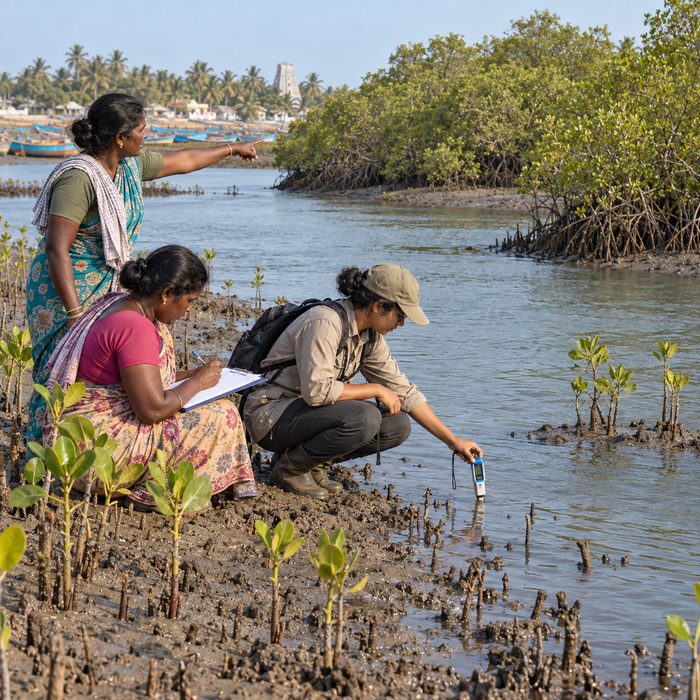
Start with the site
Planting seedlings is only one possible step in mangrove restoration. First examine tidal exchange, salinity, elevation, sediment, existing vegetation and the reasons the habitat was lost. A site without suitable water flow may not support planted mangroves.
Work with natural processes
Where conditions allow, protecting natural regeneration can be effective. If planting is needed, choose locally suitable species and appropriate locations rather than placing a single species everywhere. Involve nearby communities in decisions and avoid blocking channels used by fishers and other wildlife.
Measure more than survival
Count surviving seedlings, but also monitor growth, natural recruitment, water conditions and the return of associated wildlife over time. Adjust the approach when results show a problem. A successful project develops a functioning coastal ecosystem, not merely a high planting count.